Why Do Knots Form in Flowing Liquids? Scientists Have an Answer
Flowing liquids may look smooth on the surface, yet deeper patterns shape how motion unfolds inside them. Recent research shows that swirling fluids can form real knot-like structures, and scientists now study how these knots appear, change, and break apart.
As a result, the idea that knots exist only in ropes or cables no longer holds. Instead, knots in liquids now serve as clues about motion, structure, and energy inside complex flows.
From Tangled Threads to Fluid Knots
Anyone who pulls out a tangled cord understands how motion alone can twist lines into loops. Flowing liquids follow a similar path. As swirling regions move, they curve and loop. Soon, flowing segments wrap around each other and create rings that link together. These shapes behave like invisible strands carried through the liquid, yet they form entirely from motion rather than solid matter.
Scientists describe these structures as vortex lines or vortex tubes. Each loop traces the path of rotating fluid as it curves through space. Early theories predicted that these loops could link into knots. Yet, researchers lacked proof.
For years, knotted vortices existed only in equations. Then, experiments finally turned theory into real-world evidence, and researchers began observing knots forming inside controlled flows.
First Liquid Knots Created by Researchers
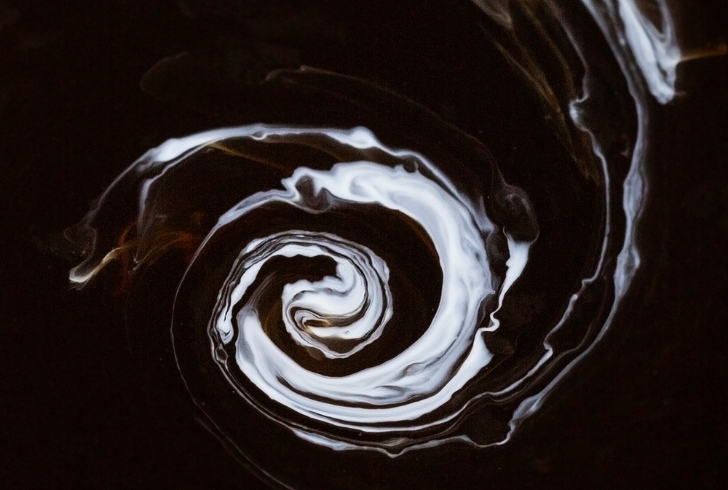
Freepik | New hydrofoil technology allows scientists to design and trigger specific fluid knots.
Breakthrough experiments changed the field. Instead of waiting for turbulence to create knots by chance, scientists shaped flows so that knots formed right from the start. They designed a special hydrofoil that released a loop of fluid when moved. That loop twisted around itself into a structured knot as it traveled through the liquid.
High-speed cameras and three-dimensional imaging allowed researchers to track every motion. The knot stretched, curved, and shifted. Then, new loops appeared as parts of the vortex reconnected.
The experiment marked the first time scientists created and observed a controlled knotted vortex inside a real flowing liquid. This shift transformed knots in fluids from theory into measurable reality.
The Role of Mathematics Before Experiments
Knot theory, a branch of topology, studies how loops twist and link. This field sorts knots based on properties that stay constant when shapes bend or stretch without cutting. That same idea applies to vortex loops in fluid motion. Each vortex line carries topological structure. Even when the shape stretches, the core identity of the knot remains.
Researchers use a quantity called helicity to measure how strongly vortex lines wrap and link. In ideal conditions, helicity stays constant. That means knots inside fluids carry trackable structure until reconnections occur. Because of this link between mathematics and real fluid motion, scientists can study energy transfer and flow organization through knot behavior instead of focusing only on velocity or pressure.
How Scientists Created Knots in Flowing Fluids
Creating a knotted vortex required precision. Researchers designed a shaped hydrofoil positioned underwater. When moved in a sharp, controlled motion, the foil shed a vortex loop. However, the design caused the loop to twist around itself instead of moving away as a simple ring. This process created a knot with predictable geometry.
To study the knot, scientists added tracer particles and used lasers with synchronized cameras. The data allowed them to rebuild the three-dimensional path of the vortex. Frame by frame, they watched the knot stretch and reshape. The structure did not disappear instantly. Instead, it moved through clear stages before reconnections rearranged its shape.
When a Fluid Knot Breaks
A knotted vortex does not remain stable. As the knot travels, motion stretches some parts while tightening others. Soon, sections of the loop move closer together. When that separation becomes small enough, reconnection events occur. During these moments, the topology of the knot changes. New loops form while older ones separate.
Experiments show that knots do not dissolve at once. Instead, they simplify step by step. Each reconnection produces smaller loops that carry portions of the original structure. Energy redistributes through those loops, and the system gradually loses complexity while motion continues. This staged transformation offers a clear window into how fluids reorganize energy through topological change.
Why Knots in Vortices Affect Turbulence and Energy Flow
At first, knotted vortices may look like laboratory curiosities. Yet, turbulence in nature relies on swirling structures at many scales. Because of this, knots influence how energy travels across those scales. When vortex lines link or twist, they change how momentum transfers through the fluid. As a result, knot structure plays an active role in turbulence behavior.
Helicity also affects flow stability. Systems with strong rotational motion, including storms, industrial mixers, and rotating machinery, respond to knot formation in measurable ways.
By studying knots in controlled experiments, scientists test theories about turbulence in real-world environments and refine models that predict how fluids behave under stress.
Visualizing Knots Through Experiments
Knotted vortices capture attention because they are highly visual. When researchers reconstruct images of liquid motion, the vortex core traces out glowing shapes that curve and fold through three-dimensional space. These visual patterns make topological motion easier to understand.
Through detailed visualization, researchers study how curvature, tension, and nearby motion affect knot evolution. Recorded footage and simulations work together. As a result, observations turn into measurable insights, and theoretical models adapt to match real behavior. This feedback loop strengthens understanding of complex flows.
Knot Formation in Natural and Engineered Flows
Research no longer focuses only on knots created by design. Scientists now investigate how knotting forms naturally during chaotic motion. In many systems, vortex lines stretch and fold repeatedly. Under the right conditions, those folds cause lines to cross and loop. Soon, spontaneous knotting appears without any deliberate control.
Recent studies show that certain flow conditions increase the likelihood of knot formation. When rotation, shear, or confinement interact in specific ways, knots last longer and appear more frequently. Because of this, researchers now explore how controlled conditions may guide knot formation for scientific and technological purposes.
Uses of Knotted Flow Research
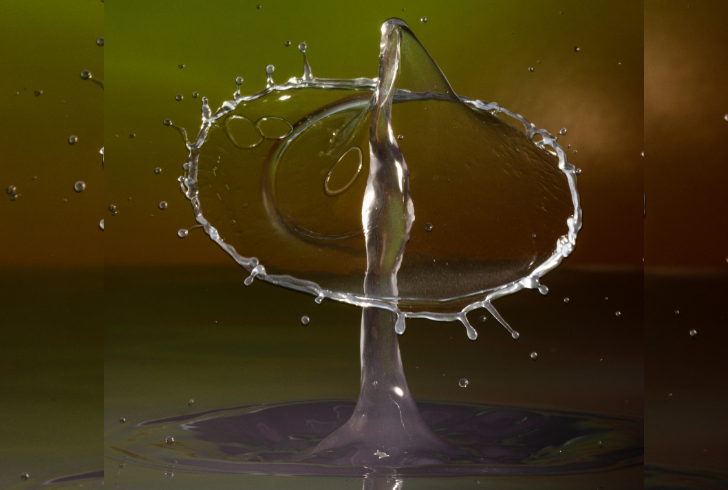
Freepik | Knot research helps engineers optimize turbine airflow and advance fusion energy science.
As research progresses, real-world uses continue to develop. In microfluidic devices, engineers often struggle to mix substances effectively because turbulence remains limited at very small scales. Knotted vortices may create stronger mixing without mechanical parts, allowing reactions to complete more efficiently.
Engineers studying airflow and water motion around wings, turbines, and blades also benefit from knot research. By shaping motion, designers may reduce noise, lower drag, or prevent harmful vortex buildup. Also, magnetic field lines in fusion plasmas show knot-like behavior, so insights from fluid knots may also support advances in energy science.
Future of Knot Research in Liquids
The field continues to expand, with upcoming research likely exploring more complex knots, multiple interacting structures, and flows that resemble natural conditions. Scientists aim to understand how knotted vortices behave together, merge, and dissolve in turbulent surroundings.
Theoretical models are moving toward full-scale statistical descriptions of flows that include knotting as a structural factor. Knots are becoming a standard part of how scientists describe motion inside complex liquids.
Research into knotted fluid motion continues to reveal the connection between structure and energy in flowing systems. These insights highlight organized patterns within seemingly chaotic flows and open new paths for innovation in science and engineering, providing clearer ways to design, guide, and understand dynamic fluid behavior.