These Discoveries Changed How Historians View America’s Founding Fathers
America’s Founding Fathers remain some of the most studied figures in history. Their letters, speeches, and official records have filled libraries for more than two centuries. Even so, historians continue to uncover surprising discoveries that add fresh details to their lives and the nation they helped create.
Modern science and archaeology have opened doors that earlier generations could only imagine. DNA testing, archaeological excavations, and newly uncovered historical documents have answered long-debated questions while raising a few new ones. These discoveries have not rewritten American history, but they have made it far richer and more complete.
Thomas Jefferson’s Family Story Came Into Sharper Focus
For generations, one of the biggest historical debates centered on Thomas Jefferson and Sally Hemings. Hemings was an enslaved woman who lived at Jefferson’s Virginia estate, Monticello. Stories that Jefferson fathered her children circulated for decades, but historians fiercely disagreed over the claims.
Many scholars once dismissed the allegations as political attacks created by Jefferson’s opponents. Others believed the available evidence deserved closer examination. The debate continued for well over a century because no scientific proof existed to settle the question.
Everything changed in 1998 when researchers published the results of a groundbreaking DNA study. Scientists examined descendants of Eston Hemings, Sally Hemings’ youngest son, and compared their DNA with that of descendants of the Jefferson family line. The results showed a genetic connection that could not easily be ignored.
DNA alone could not identify which Jefferson family member fathered the children. Historians then combined the genetic evidence with family records, travel logs, and historical timelines. Taken together, the evidence strongly pointed to Thomas Jefferson.
The Thomas Jefferson Foundation, which oversees Monticello, carefully reviewed the available research. After examining the DNA findings alongside historical documents and oral histories, the organization concluded that Jefferson most likely fathered at least six of Sally Hemings’ children.
However, not every historian agrees with that conclusion. Some researchers continue to argue that another Jefferson relative may have been responsible. Still, the majority of historians today accept that Thomas Jefferson was most likely the father, making the DNA study one of the most important discoveries in early American history.
George Washington’s Lost Whiskey Empire Reappeared
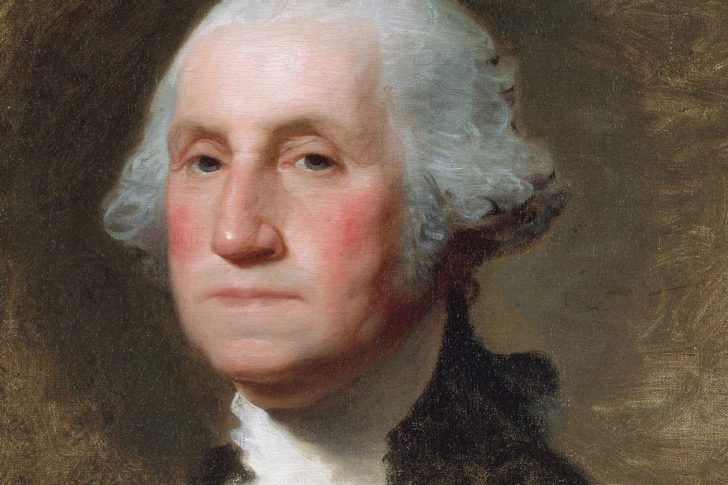
History / George Washington is usually remembered as America’s first president and the commander of the Continental Army. Few people realize he also became one of the country’s largest whiskey producers during the final years of his life.
Historians already knew Washington owned a distillery because business records survived. However, no one fully understood how large or advanced the operation had become until archaeologists made an important discovery at Mount Vernon.
In 1999, researchers uncovered the remains of Washington’s long-lost whiskey distillery. Excavations revealed stone foundations, production equipment, and other artifacts, enabling experts to reconstruct the site with remarkable accuracy.
The discovery showed that Washington’s business was far more impressive than many historians had imagined. By 1799, his distillery ranked among the largest commercial whiskey operations in the young United States, producing thousands of gallons each year.
The excavation also revealed Washington’s sharp business instincts. He constantly looked for new ways to increase income from his estate through farming, milling, livestock, and whiskey production. His success as an entrepreneur became much clearer after archaeologists uncovered physical evidence of the operation.
A Missing Draft Revealed How the Declaration Evolved
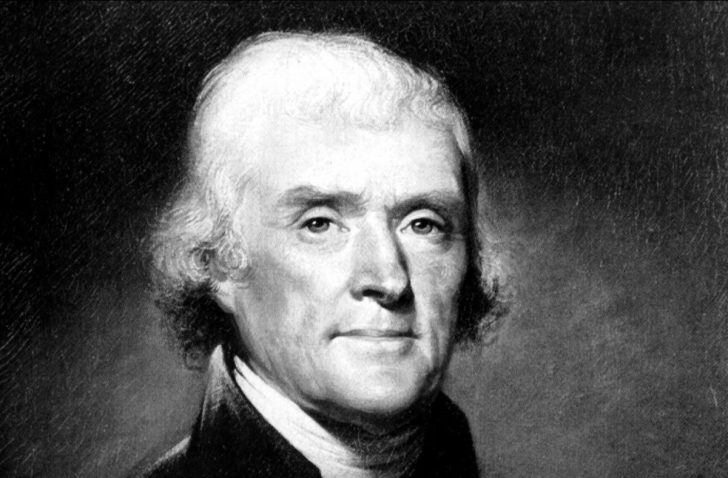
Adelphi Uni / In 1947, historian Julian P. Boyd discovered a previously unknown draft of the Declaration of Independence among Thomas Jefferson’s papers.
Before that moment, historians believed Jefferson’s famous “Rough Draft” represented the earliest surviving version of the historic document.
The newly discovered fragment changed that assumption. It proved Jefferson had prepared an even earlier draft before creating the version most people already knew. That small piece of paper offered historians an important window into the writing process.
Comparing the fragment with later drafts showed how Jefferson carefully refined his language. Historians could follow his revisions step by step before the document reached fellow committee members John Adams and Benjamin Franklin for further editing.