New Fire Amoeba Thrives in Boiling Hot Springs and Pushes Eukaryotic Life to Unprecedented Hottest Limit
Scientists have found a tiny organism living where most complex cells would quickly fall apart. A newly identified amoeba from California can actively grow and reproduce at temperatures reaching 63 degrees Celsius, or 145.4 degrees Fahrenheit.
Researchers named the species ‘Incendiamoeba cascadensis,’ which translates roughly to “fire amoeba from the Cascades.” The discovery pushes the known temperature limit for growing eukaryotic life beyond the previous mark of about 60 degrees Celsius.
The study, published in the journal Cell, challenges a long-standing idea about how much heat complex cells can tolerate. It also raises an obvious question about how many other heat-loving organisms remain hidden in geothermal environments.
California Hot Springs Hid a Record-Breaking Amoeba
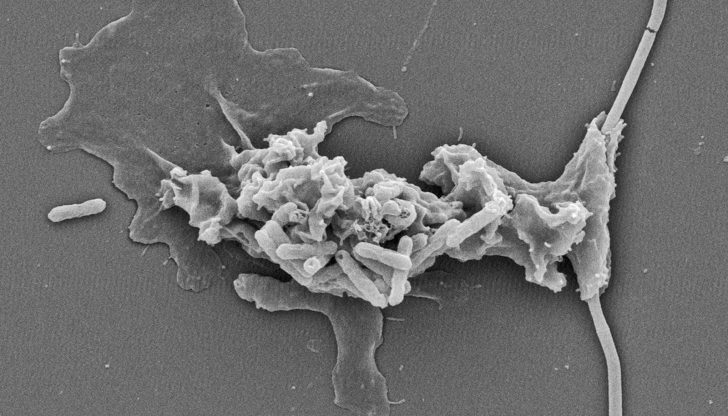
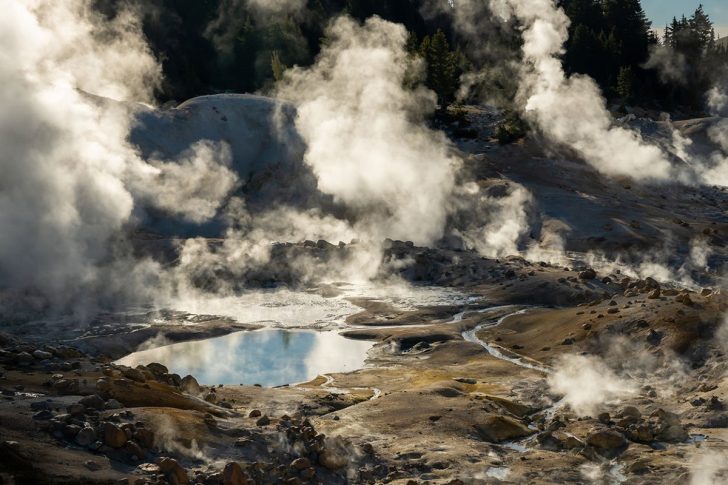
The News / Researchers collected the fire amoeba from a geothermal stream in Lassen Volcanic National Park in California.
The small stream runs through a meadow and stays close to neutral on the pH scale, but its temperature makes it an unforgiving home.
Water at the site ranges from about 47 to 64 degrees Celsius. Those temperatures are far beyond what most animals, plants, fungi, and other eukaryotic organisms can tolerate for extended periods.
Back in the laboratory, scientists tested exactly how much heat Incendiamoeba cascadensis could handle. They observed mitosis, the process cells use to divide, at temperatures as high as 63 degrees Celsius. The amoeba remained active at 64 degrees Celsius and continued moving around in search of food. That behavior shows a level of heat tolerance that researchers had not previously confirmed in a eukaryotic organism.
Turn up the temperature further, however, and the fire amoeba changes its strategy. At around 70 degrees Celsius, or 158 degrees Fahrenheit, it stops reproducing and creates a protective outer layer.
Its survival skills become even more striking when compared with other forms of life. Some archaea can tolerate far higher temperatures, with Methanopyrus kandleri surviving at temperatures reported around 122 degrees Celsius. Archaea have much simpler cellular structures than eukaryotes. Eukaryotic cells contain a nucleus and specialized internal structures called organelles, and those complicated systems are generally more sensitive to extreme heat.
Before the fire amoeba discovery, only a handful of fungi and red algae were known to grow near 60 degrees Celsius. Incendiamoeba cascadensis has now moved that boundary several degrees higher.
Its Cells Come Equipped for Brutal Heat
The Moto / Scientists examined the amoeba’s genome to understand how it handles such punishing conditions. More than half of its genes appear unique to its lineage, suggesting a long history of adaptation to geothermal environments.
The organism also carries extra genes linked to protein maintenance and DNA repair compared with amoebae from cooler habitats. Those systems could help its cells repair damage caused by sustained exposure to high temperatures.
Researchers found that proteins in the fire amoeba contain more positively charged amino acids on their surfaces. Similar traits occur in some heat-tolerant bacteria and archaea and may help proteins remain stable instead of unfolding or sticking together.
The amoeba can also change its physical form depending on its surroundings. Researchers observed a slower amoeba-like form that appears well suited to feeding and a faster, worm-like form capable of moving more quickly.
The organism’s extreme habitat may offer another benefit. Very few eukaryotic creatures can operate at these temperatures, so the fire amoeba faces little competition from other complex organisms. It also appears to have few predators in its scorching home. Scientists have not found organisms that regularly prey on amoebae under such hot conditions, giving Incendiamoeba cascadensis an unusually safe hunting ground.
Researchers have already found signs that similar organisms may live far beyond California. Environmental DNA searches have detected identical or closely related genetic sequences in geothermal regions elsewhere around the world.