Florida Lightning Season Begins with Tragic Kayaking Death
Florida’s 2026 lightning season has opened with a heartbreaking tragedy that highlights the dangers of the state’s volatile summer weather. An 18-year-old kayaker lost his life after being struck by lightning while paddling on the Blackwater River in the Florida Panhandle. The incident serves as a stark reminder that lightning can turn a routine outdoor activity into a life-threatening situation within seconds.
The fatal strike happened on May 31 near Milton, a community in Santa Rosa County. The victim, Michael Aidan Vargas, was kayaking alongside his father when severe weather moved through the area. Witnesses reported seeing a lightning bolt strike Vargas around noon, knocking him from his kayak and into the swollen river below.
Witnesses, including Vargas’s father and employees with the Navy Morale, Welfare and Recreation program, watched the terrifying event unfold. According to reports, the lightning strike was direct and immediate. Vargas was thrown into the river and never resurfaced.
Emergency responders launched an extensive search operation soon after the incident. The Florida Fish and Wildlife Conservation Commission coordinated the effort with support from multiple agencies. Rescue teams searched the river for hours under difficult conditions as family members and witnesses waited for news.
The operation involved personnel from the Santa Rosa County Sheriff’s Office, the Escambia County Sheriff’s Office Dive Team, and Daphne Search and Rescue. After an intensive search, authorities recovered Vargas from the water. Officials later confirmed that he had died as a result of the incident.
Witness Steven Sanders recalled hearing a powerful lightning strike that cut through the air with startling force. He later noticed a large emergency response gathering along the shoreline and on the river. For those present, the scene was both chaotic and heartbreaking.
Why Florida Remains Vulnerable to Lightning?
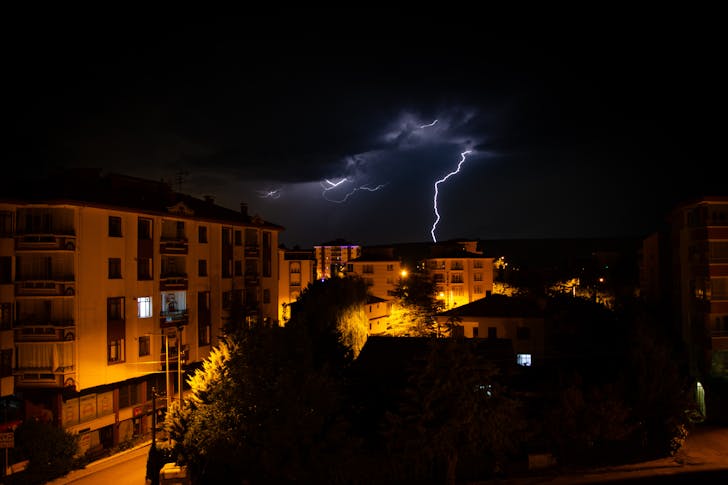
Elif / Pexels / This tragedy marks Florida’s first lightning-related death of 2026, but it is far from an isolated event.
Florida consistently records more lightning fatalities than any other state in the country. The combination of warm temperatures, high humidity, and frequent thunderstorms creates ideal conditions for lightning development.
Statistics from the National Lightning Safety Council show that Florida has recorded 100 lightning deaths since 2006. The state averages roughly seven lightning fatalities each year. Those numbers continue to place Florida at the top of national lightning death rankings.
Recent years tell a similar story. Six people died from lightning strikes in Florida during 2025. The year before that, four fatalities occurred between June and September. Victims were engaged in common outdoor activities such as fishing, hunting, and spending time at the beach.
Some parts of Florida experience especially intense lightning activity. The Miami-Fort Lauderdale region records the highest number of lightning strikes per square mile of any city area in the state. During summer afternoons, thunderstorms can form rapidly and move across large areas with little warning.
Water Activities Carry Serious Lightning Risks
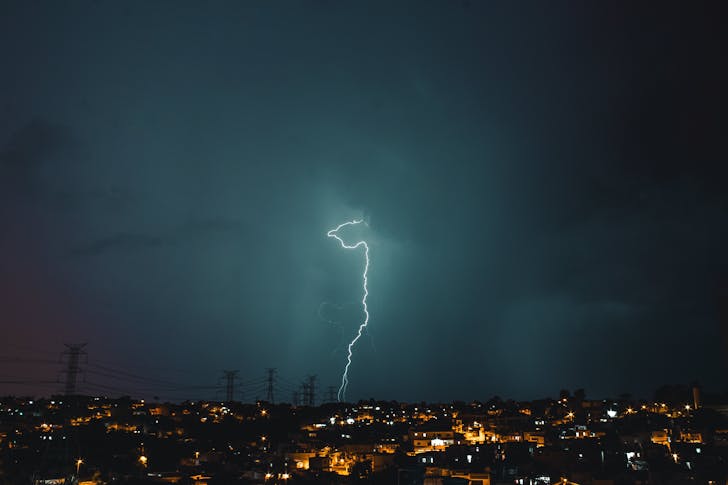
Bruno / Pexels / Lightning experts have long warned that boating, fishing, and kayaking rank among the most dangerous activities during stormy weather.
Open water offers little protection when lightning develops nearby. In many cases, a person on a kayak or small boat becomes one of the tallest objects in the immediate area.
That exposure increases the risk of a direct strike. Unlike people inside substantial buildings or enclosed vehicles, kayakers have virtually no shelter available once a storm arrives. Even a brief delay in seeking safety can have devastating consequences.
One of the most misunderstood facts about lightning is how far it can travel from a storm. Many people assume they are safe if dark clouds are not directly overhead. In reality, lightning can strike 10 to 12 miles away from the center of a thunderstorm.
Meteorologists refer to these strikes as “bolts from the blue.” These lightning bolts can emerge from the edge of a storm and hit locations where skies appear relatively calm.