California Man Receives ‘Postcard from Heaven’ 20 Years After His Father’s Death
A postcard can look like an ordinary scrap of paper until the handwriting belongs to someone who is gone. That is what makes the story of a Southern California man and a message from his late father so powerful.
The postcard surfaced roughly 20 years after the father’s death, carrying a remarkably simple message: “Arrived safely.” Those words once served as a routine travel update, but decades later, they carried an entirely different weight for the son who received them. “For me, this is a postcard from heaven,” the man told ABC7.
The story has gained attention because nothing about the original note appears unusual. The father was simply letting family know that he had reached his destination without trouble, something travelers regularly did before instant messages and smartphones took over.
Years changed the meaning of that sentence. After the father’s death, “Arrived safely” could easily sound like one final reassurance from a parent who had been gone for two decades, even though there is no evidence that he intended anything beyond a normal travel update.
A Routine Postcard Became a Priceless Family Message
Hart / Pexels / Postcards once handled a job that texts and messaging apps perform today. Travelers bought a card, wrote a few lines, added a stamp, and sent relatives a quick update from the road.
Messages confirming a safe arrival were especially common. Historical postcards preserved in archives contain the same kind of language, showing how travelers regularly told relatives that they had arrived safely before adding a few details about their trips.
That history makes the Southern California postcard even more striking. Its wording was completely normal when the father wrote it, yet the passing of time turned a practical message into something his son could never have expected. The handwriting adds another layer to the story. A handwritten note preserves tiny personal details, including the shape of letters, the pressure of a pen, and the familiar way someone signs a message. “This is a treasure for me,” the emotional son says.
Did the Postcard Really Spend 20 Years in the Mail?
The emotional side of the story is clear, but the postal mystery deserves more caution. An old postcard appearing decades later does not automatically mean it spent all those years moving through the postal system.
Old mail can disappear in houses, storage boxes, furniture, former businesses, or collections. Someone may discover the item years later and place it back into the mail, allowing postal workers to deliver it long after the original sender expected it to arrive.
Other delayed postcard stories support that possibility. When a postcard dated 1903 reached an address in Wales 121 years later, Royal Mail said someone had probably put the old card back into the postal system recently. That explanation is far more likely than a postcard remaining inside a postal facility for more than a century. Once an old item reenters the mail stream, postal workers may simply process it according to the address that remains visible.
For the Southern California story, the safest conclusion is that an old postcard from the man’s father surfaced around two decades after his death. Without detailed postal records, there is no solid basis for claiming that it continuously traveled through the mail system during that entire period.
Two Ordinary Words Now Carry a Different Meaning
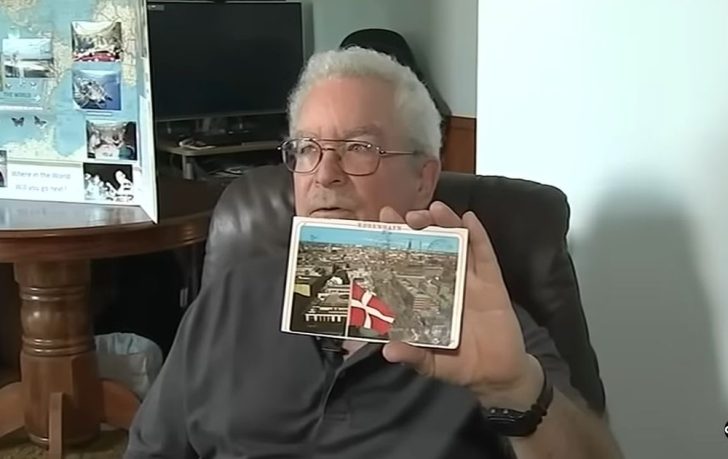
Scoop Upworthy / “Arrived safely” sounds completely different after the sender has died. For the father, it was most likely a practical way to tell his family that a journey had gone smoothly and there was no reason to worry.
However, for his son, those same words arrived with decades of memories attached to them. The message can feel like a final check-in from his dad, even though that emotional meaning developed only because of what happened afterward. That distinction keeps the story grounded without taking anything away from it. There is no need to turn the postcard into a supernatural event for its timing to feel remarkable.
The card also captures something modern communication often loses. A text can vanish with an old phone or account, while a handwritten postcard can sit unnoticed for decades and still carry the marks left by the person who wrote it.