Biologists Discover the First New Cat Species in Over a Century
A tiny spotted cat from Bolivia has just earned a much bigger place in the animal kingdom. Scientists have formally identified the tilcayo as a distinct species, making it the first new living cat species named and described in more than a century.
The cat, officially named ‘Leopardus tilcayo,’ lives in the misty Yungas forests along the eastern Andes. Researchers published their findings in Current Biology on September 17, 2026, after years of genetic and physical research.
Bolivian biologist Paola Nogales-Ascarrunz and evolutionary biologist Jonas Lescroart led the international research team. Nogales-Ascarrunz is also a National Geographic Explorer, while Lescroart works at the University of Antwerp in Belgium.
A Tiny Cat Called Tigrino Started the Mystery
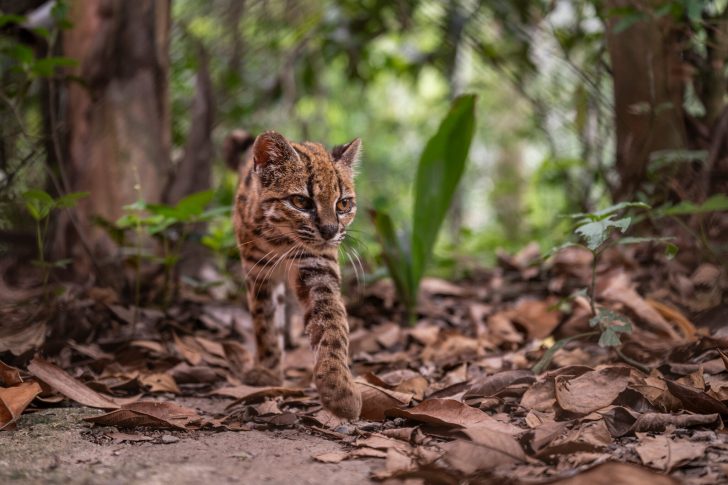
NY Post / In 2016, Nogales-Ascarrunz received a call from Senda Verde Wildlife Sanctuary in Bolivia’s Yungas region. A local family had found a small spotted cat in the forest and initially tried to keep the animal as a pet.
The family eventually surrendered the cat to the sanctuary. Staff believed the male was a tiger cat, a group of small spotted wild felines found across South America, and gave him the nickname “Tigrino.”
Nogales-Ascarrunz noticed something strange when she examined him. Tigrino looked similar to known tiger cats, but his small size and other physical traits did not quite match descriptions scientists had been using.
That mismatch raised a simple but important question. Scientists knew tiger cats lived in Bolivia, but did they actually know which species lived there?
Answering that question became much more complicated than comparing photographs. Many existing descriptions of South American tiger cats relied heavily on specimens from Brazil, leaving major gaps in scientists’ understanding of cats living elsewhere on the continent.
The researchers began gathering genetic evidence. Their study eventually analyzed DNA from 38 cats sampled across South America and included genetic material obtained from eight museum specimens held in collections in Europe and the United States.
The results showed that Tigrino was not simply an unusually small member of a familiar species. His DNA belonged to a distinct evolutionary lineage that researchers estimate separated from other tiger cats around 1.4 million years ago.
However, the name “tilcayo” was not invented in a laboratory. Researchers retained a local name already used for the animal in communities near its habitat, acknowledging that people living alongside the cat knew about it long before science formally classified it.
Meet the Tiny Tilcayo of Bolivia’s Cloud Forests
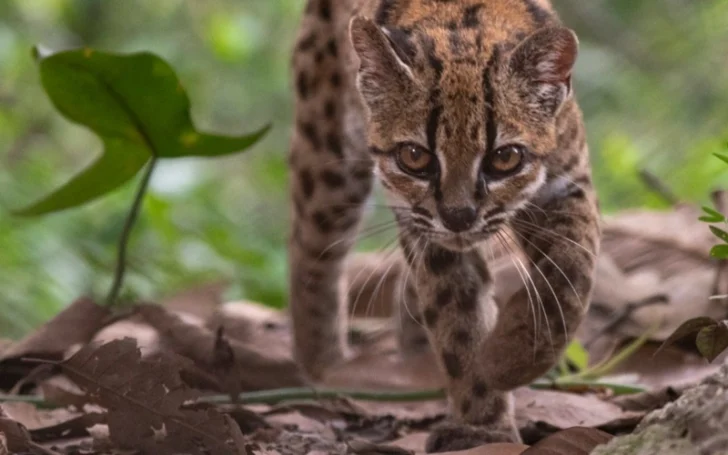
GTN / The tilcayo is seriously small for a wild cat. An adult weighs around 1.4 kilograms, or roughly 3 pounds, making it lighter than many ordinary house cats.
Its head and body measure roughly 425 to 505 millimeters, or about 17 to 20 inches. Plus, its tail adds another 250 to 265 millimeters, giving the little predator a long-tailed appearance despite its compact body.
The cat’s coat is light brown with large, irregular dark rosettes. Many of the markings remain open or only partly closed, creating a distinctive pattern against a beige to light brown background. The fur becomes darker along the middle of its back and lighter toward its limbs.
Its known home is equally striking. The tilcayo inhabits Bolivia’s Yungas, a steep belt of forest running along the eastern slopes of the Andes. Clouds regularly cover these forests, producing the cool, damp conditions that support extraordinary biodiversity. Thick vegetation, steep terrain and limited visibility also make studying a secretive three-pound wild cat extremely difficult.
Scientists still know remarkably little about how the tilcayo lives. Researchers have examined only two live individuals, along with a limited number of camera-trap records and other field evidence.
Scat analysis has revealed remains of small rodents, suggesting that these animals form at least part of the cat’s diet. Camera traps also indicate that the tilcayo may be more active after dark. Much remains unknown. Researchers do not yet have a reliable population estimate, and they have not established the species’ complete geographic range.